The Rise of Provenance Verification in Writing
Detection asks "does this look like AI?" Provenance asks "can you show how it was made?" One is a guess. The other is evidence. From art forgery to pharmaceutical supply chains, provenance has always been the answer. Now it's coming to writing.
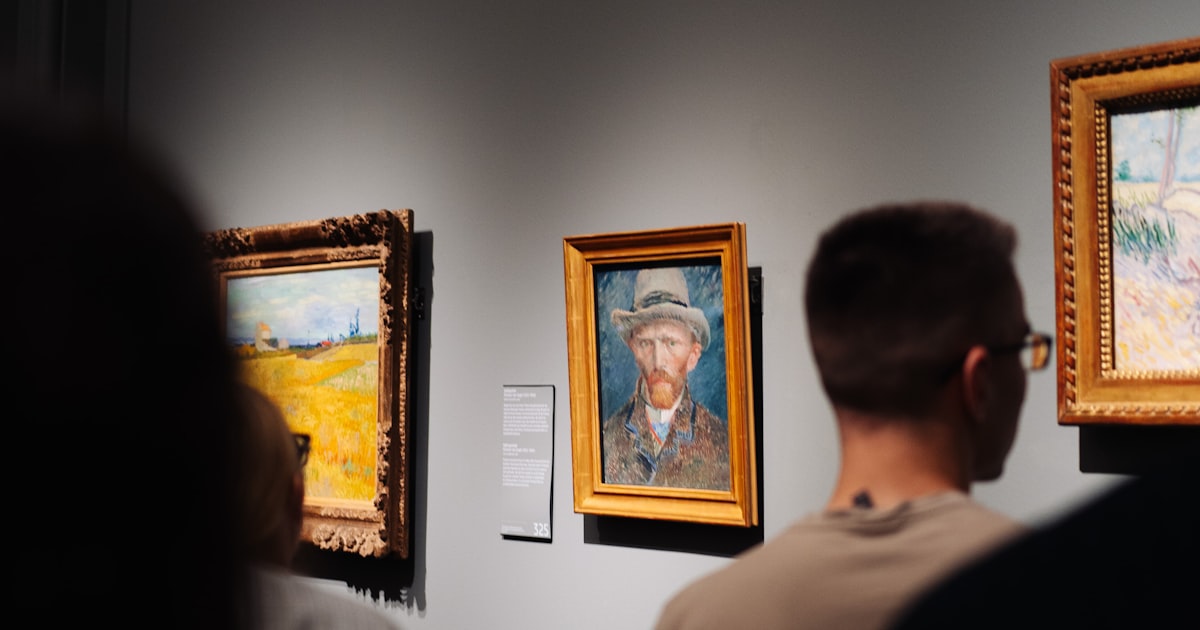
In 1945, Han van Meegeren sat in a Dutch courtroom facing charges of collaborating with the Nazis. He'd sold a Vermeer painting to Hermann Goering. His defense was extraordinary: the painting was a forgery. He'd painted it himself. To prove it, he offered to paint another "Vermeer" in front of witnesses. It took him weeks, but he did it, and the court believed him.
The thing that made van Meegeren's forgeries possible for so long wasn't his technical skill -- it was the absence of provenance. Nobody could trace where those paintings had actually been for the past three centuries, because the paper trail was fabricated along with the canvas. Once experts started demanding verifiable chain-of-custody documentation rather than relying on stylistic judgment alone, the art world's forgery problem didn't disappear, but it got dramatically harder.
I keep thinking about that story because the same shift is happening in writing right now. For years, institutions tried to answer the question "does this text look like AI?" with detection tools that made their best statistical guess. Writers paid the price when those guesses were wrong. But a better question is emerging, one that's older and more honest: "Can you show how this was made?"
That's provenance verification. And it's not a new idea. It's an old idea finally being applied to the right problem.
Provenance Is Everywhere Except Writing (Until Now)
The concept of proving origin through documentation -- rather than through expert opinion alone -- is so deeply embedded in other industries that we barely think about it.
Art authentication moved from connoisseurship (experts looking at paintings and rendering judgments) to provenance-based verification (documented chain of custody, material analysis, exhibition history) after a series of embarrassing forgery scandals in the mid-20th century. Today, no major auction house will sell a significant work without provenance documentation. Expert opinion still matters, but it's one input among many, not the final word.
Pharmaceutical supply chains use provenance tracking to verify that medications are genuine, not counterfeit. The Drug Supply Chain Security Act (DSCSA) in the United States requires serialization and tracking of every prescription drug from manufacturer to pharmacy. Each transaction is recorded. Each handoff is documented. The result: you can trace any pill bottle back through its entire journey. Nobody relies on "does this pill look right?" as the primary quality check.
Wine authentication shifted toward provenance after high-profile fraud cases, including Rudy Kurniawan's multimillion-dollar counterfeiting operation. Today, fine wines carry serial-numbered capsules, and auction houses verify cellar storage histories. Some producers embed NFC chips in bottle caps.
Digital media is moving in the same direction through the C2PA standard (Coalition for Content Provenance and Authenticity), backed by Adobe, Microsoft, the BBC, and others. C2PA embeds cryptographic provenance metadata into images and video at the point of creation -- who created it, when, with what tool, and what edits were made afterward. The idea is the same: don't ask "does this look real?" Ask "can you trace where it came from?"
The pattern across all these domains is consistent. When expert judgment alone proves unreliable, the response is always the same: build a verifiable chain of documentation. Writing is arriving at that same conclusion, just later than most.
Why Detection Ran Into a Wall
Build evidence before the accusation
Start a voice baseline and see what a defensible report looks like. It takes minutes now and saves weeks later.
To understand why provenance matters for writing, you have to understand why detection failed. Not "failed" as in "wasn't useful at all" -- the tools do catch some AI-generated text -- but failed as in "couldn't be trusted as standalone evidence in high-stakes decisions."
The problems are well-documented at this point. A 2023 paper by Sadasivan et al. at the University of Maryland demonstrated that as language models improve, the statistical signals that detectors rely on become weaker. Their finding was striking: as models approach human-level text quality, reliable detection becomes theoretically impossible in the general case. The distributions overlap too much.
In practice, this plays out in several ways. Detectors based on perplexity scoring (which includes most commercial tools -- Turnitin, GPTZero, Copyleaks, Originality.ai) measure how "predictable" text is. Low perplexity means predictable word choices, which the tool interprets as likely machine-generated. But formal academic writing, technical documentation, heavily edited prose, and writing by non-native English speakers who learned through structured grammar instruction all produce low-perplexity text for entirely human reasons. A 2024 study found that some detectors flagged non-native English writing as AI-generated up to 60% of the time. That's not an edge case. That's a systematic bias affecting millions of people.
Then there's the arms race problem. Every time a model improves -- and they improve fast -- detectors need to recalibrate. But recalibration takes time, testing, and data. Detectors are always playing catch-up, and the gap is widening, not narrowing.
And finally, there's the accountability gap. These tools have been deployed in consequential settings -- academic integrity hearings, employment decisions, editorial gatekeeping -- without transparent error rates, without explanation of their scoring, and without appeal mechanisms. That's not how you treat evidence that can change someone's life.
How Provenance Actually Works
Provenance verification for writing rests on a few core technical concepts. None of them are new -- they're borrowed from cryptography, document management, and supply chain verification -- but their application to writing is relatively recent.
Revision history capture. The most basic layer of provenance is a record of how a document changed over time. Google Docs does this automatically; every edit is timestamped and stored. More sophisticated tools capture finer-grained data: typing speed, pause duration, the order in which sections were composed, where deletions and rewrites happened. This creates a timeline of composition that's extremely difficult to fake retroactively. Human writing has characteristic patterns -- bursts of typing, pauses for thought, jumping between sections, rewriting openings multiple times -- that are fundamentally different from the patterns you'd see if someone pasted in pre-written text.
Cryptographic hashing. A hash is a one-way mathematical function that turns any input (a document, a draft, a paragraph) into a fixed-length string of characters. Change even one character in the input and the hash changes completely. When you hash a draft at a specific point in time, you create a verifiable proof that that exact version of the text existed at that moment. If someone later questions whether you had a draft on a certain date, the hash proves it. This is the same principle behind blockchain timestamps -- a hash, once recorded, can't be retroactively altered without detection.
Timestamping services. Independent timestamp authorities (TSAs) provide third-party verification that a hash existed at a specific time. The IETF has a standard for this (RFC 3161, "Internet X.509 Public Key Infrastructure Time-Stamp Protocol"), and there's a newer Internet-Draft specifically addressing proof of provenance for digital content. The key property is independence: the timestamp comes from a trusted third party, not from the person claiming authorship. Your local file modification date can be changed. A timestamp from an independent authority cannot.
Voice fingerprinting. This is the stylometric layer -- a statistical profile of your writing patterns across vocabulary, syntax, sentence length, punctuation, paragraph structure, and more. When you build a baseline from multiple verified samples, future texts can be compared against it. The question isn't "is this AI?" but "is this consistent with how this person writes?" That's a much more defensible question, and the answer can be examined and explained dimension by dimension.
Chain of custody documentation. Provenance isn't just about the text itself -- it's about who handled it, when, and what happened at each stage. A provenance report might show: draft created at 2:14pm on January 15th (captured by writing environment), hash recorded at 2:47pm (timestamped by TSA), voice fingerprint compared against baseline at 3:30pm (match score: 94% across 12 dimensions), PDF exported and emailed to client at 4:15pm (email server timestamp). Each step is independently verifiable. Together, they form a chain that tells a coherent, evidence-based story about how the text was created.
What This Looks Like in Practice
Let me walk through a concrete scenario. A freelance writer -- call her Maria -- is working on a 3,000-word article for a B2B client.
Maria writes in a tracked environment that captures her revision history. She starts Monday morning with an outline, spends Tuesday doing research and rough-drafting sections 1 and 2, takes Wednesday off, finishes the draft Thursday, and does a revision pass Friday morning. Each session generates revision data showing the document growing incrementally, with the characteristic patterns of human composition: fast stretches, long pauses, sections rewritten from scratch, a paragraph moved from page 2 to page 4.
She already has a voice baseline built from five previous pieces spanning the last year. When she runs the new article against her baseline, it matches across vocabulary patterns, sentence length distribution, punctuation habits, and argument structure. The report shows specific dimensional scores, not just a single number.
Before submitting, she exports a provenance report: the revision timeline, the voice comparison, and a cryptographic hash of the final document with a third-party timestamp. She packages this with the article and sends it to her client.
When the client runs the article through a detector and gets an ambiguous score (as happens with well-written, heavily edited content), Maria doesn't have to argue about whether the detector is reliable. She opens her provenance folder and says: "Here's my revision history showing eight hours of documented work across four days. Here's my voice fingerprint showing this article matches my established writing patterns across twelve dimensions. Here's an independent timestamp proving this draft existed at each stage. What would you like to discuss?"
That's a fundamentally different conversation than "the detector is wrong and you should trust me."
The Limits of Provenance
I want to be honest about the limitations, because pretending provenance solves everything would be the same kind of overclaiming that got detection tools into trouble.
Provenance is strong evidence, not perfect evidence. Someone could theoretically type AI-generated text into a tracked editor character by character, simulating human composition patterns. It would be tedious, time-consuming, and the patterns still probably wouldn't be quite right (real hesitation and revision patterns are hard to fake convincingly), but it's not impossible in principle. Provenance raises the bar for fabrication dramatically. It doesn't make fabrication impossible.
Voice fingerprinting has limitations too. It works best when you have enough baseline samples to capture your real range, and it's less reliable for very short texts (under about 500 words) where there isn't enough data to build a meaningful statistical profile. It also requires a baseline, which means it's most useful for people who plan ahead and build their profile before they need it.
And provenance requires adoption. A provenance report is only as good as the institution's willingness to consider it. If a university's policy says "we use Turnitin and that's it," no amount of evidence documentation will help until the policy changes. The good news is that policies are changing -- slowly, but they're changing.
Standards Taking Shape
The standards infrastructure for digital provenance is maturing. The C2PA standard, originally developed for images and video, provides a framework for embedding provenance metadata that could be adapted for text documents. Its core architecture -- manifests, assertions, and cryptographic binding -- maps naturally onto the writing provenance problem.
The IETF's work on timestamp protocols (RFC 3161) provides the foundation for independent time verification. And emerging Internet-Drafts addressing proof of provenance for digital content are building toward standardized approaches that could make provenance interoperable across tools and institutions.
This matters because the biggest obstacle to provenance adoption isn't technology -- it's fragmentation. If every tool uses its own format, institutions face integration headaches and adoption stalls. Standardization solves that. When a provenance report from WritersLogic, or from Google Docs' version history, or from any other tool follows a common format and can be independently verified using standard protocols, the barrier to institutional adoption drops significantly.
Where This Is Heading
I'll make a few predictions, understanding that predictions about technology adoption are unreliable by nature.
Within the next two to three years, I expect major universities to begin accepting provenance documentation as a formal component of academic integrity processes. Some already accept draft history informally. Formalizing it with standardized formats and clear evidentiary standards is the natural next step.
Freelance contracts will start including provenance clauses. Not universally, and not immediately, but the first wave of agencies and content operations are already asking for process documentation alongside deliverables. As provenance tools make this easier, the practice will spread.
Detection tools won't disappear, but they'll be reframed. Rather than standalone arbiters, they'll become one signal among many in a broader evidence framework. A detector flag will trigger a review of provenance evidence, not an automatic finding of misconduct. This is healthier for everyone -- including the detector companies, who have been burdened with a level of trust their technology can't support.
And I think we'll see provenance become part of how writers think about their practice, not just their protection. Building a voice baseline, working in tracked environments, keeping a writing log -- these aren't just defensive measures. They're professional habits that reflect a mature understanding of how work gets valued and verified in an era of synthetic content.
The Old Question, Finally Asked Right
The shift from detection to provenance is, in the end, a shift from asking the wrong question to asking the right one. "Does this look like AI?" was always fragile, always dependent on keeping up with models, always prone to false positives and unexplainable scores. "Can you show how it was made?" is robust. It works regardless of what AI models do. It produces evidence that can be examined and explained. And it puts the focus where it belongs: on the process of creation, not on the output of an algorithm.
We've known this in art, in pharmaceuticals, in wine, in digital media. Writing is finally catching up.
Start building your provenance or see what a provenance report looks like with a sample report.
Get the Proof Stack Checklist
Download the one-page checklist that shows exactly what to save, when to save it, and how to assemble a defensible authorship packet.
We send one checklist and occasional updates. No spam.
Ready to protect your writing?
Use WritersLogic to analyze your writing, document your process, and generate defensible authenticity reports.